Major in Design
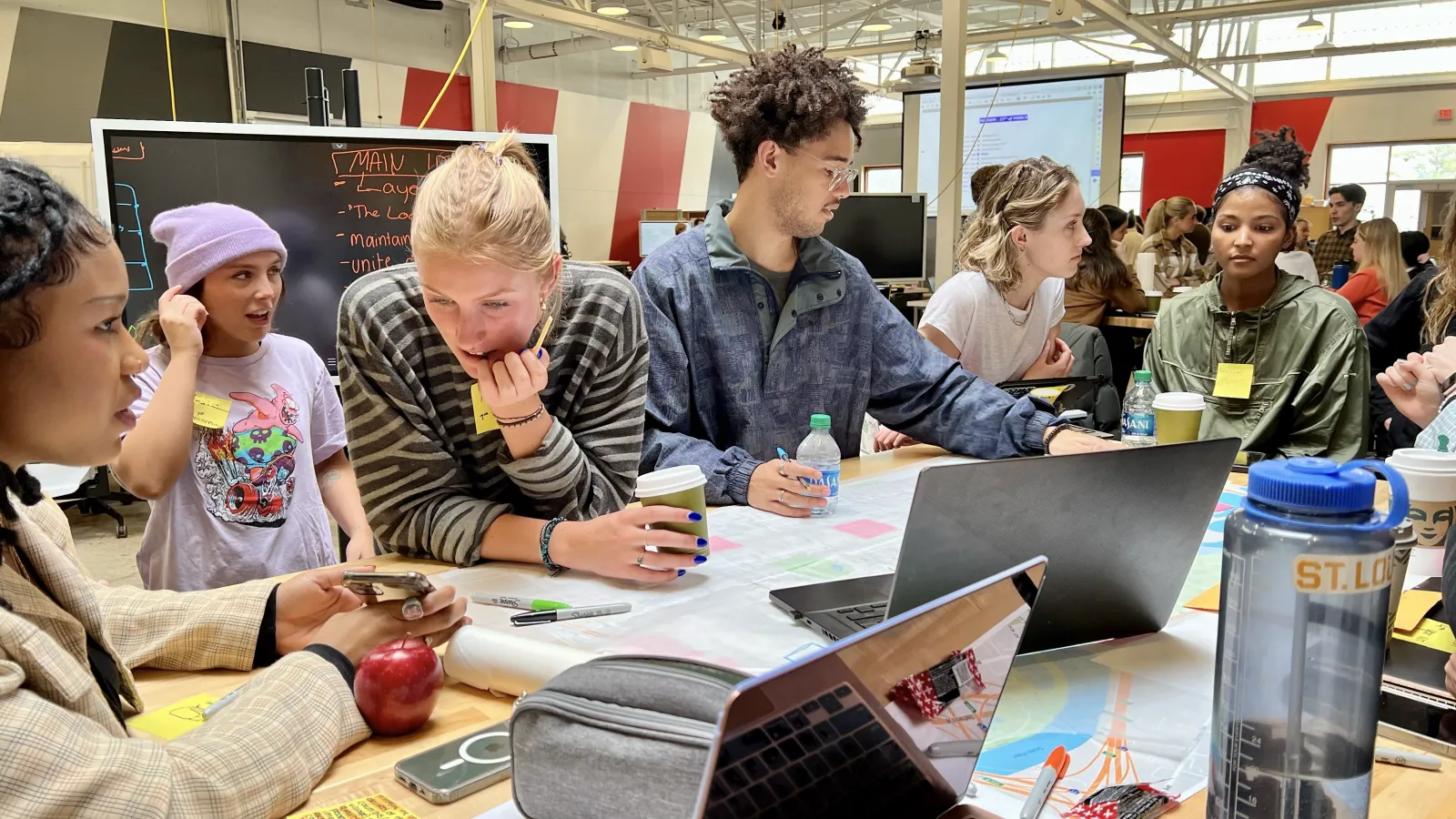
At Ohio State Design, your journey begins with our Design Foundations program—a shared first-year experience that sets the stage for everything to come. Whether you're drawn to products, spaces, visuals, or immersive media, this is where you’ll explore it all.
The Bachelor of Science in Design (BSD) is a professional degree that combines creative exploration with rigorous studio-based practice. Unlike traditional BA or BS programs, more than 65% of the curriculum is dedicated to design coursework, providing students with an immersive design education that builds creative, technical, and collaborative skills over time.
Graduates are prepared for careers across a wide range of industries, working in consulting studios, corporate design teams, startups, government agencies, and nonprofit organizations to create products, spaces, communications, and experiences that shape how people live, work, and interact with the world.
Design Foundations
Design Foundations is the shared first-year experience for all Ohio State Design students. Through hands-on studio coursework and collaborative projects, you'll build foundational creative and technical skills, develop your portfolio, and explore Industrial Design, Interior Design, Visual Communication Design, and Experiential Media Design alongside fellow aspiring designers.
Throughout the year, you'll develop a portfolio of work, discover which design discipline best aligns with your interests and strengths, and prepare to apply for admission to one of our four major programs.
Major Admissions Timeline
Students apply to their intended major during the spring semester of Design Foundations. The process begins with a portfolio submission featuring work completed throughout the year, along with any approved supplemental materials. Portfolios are due on the last Friday of spring classes, just before Finals Week.
Faculty then review each student's portfolio and application materials. Some students may be invited to interview with faculty from their intended major as part of the evaluation process.
Final admission decisions are released before the end of Finals Week, giving students clarity about their next steps as they prepare to enter the second year of their major program in the autumn semester.
Design Foundations is more than a curriculum—it’s your launchpad into the world of design.
"The Design Foundations program builds the mindset and versatility needed to succeed in a rapidly evolving creative landscape."
Deb Scott, Design Foundations Coordinator
-
BSD Major Application Submission
Current Design Foundations students can access the major admissions application and related materials submission form annually during Spring Semester, starting March 15 through the last Friday before finals week.
Explore the major programs further!
First-Year Course Sequence
Autumn
DESIGN 2110: Design Fundamentals I
DESIGN 2310: Visual Principles and Techniques I
Online Design Lecture*
Spring
DESIGN 2130: Design Fundamentals II
DESIGN 2330: Visual Principles and Techniques II
Online Design Lecture*
*Online Design Lecture: Students will take either DESIGN 2700: Introduction to Design Practice or DESIGN 2750: Design History in each semester, depending on availability and advising recommendations.
Currently, The Design Foundations courses are only offered on the Columbus and Newark campuses. Other regional campuses have access to the Online Design Lecture courses, but should plan to take the studio courses after transitioning to the Columbus campus.
Each course is offered once per academic year and must be taken in order. Because each class is a prerequisite for the next, staying on track is essential. Students who do not successfully complete a required course will not be able to continue in the Foundations sequence.
Tools and Technology
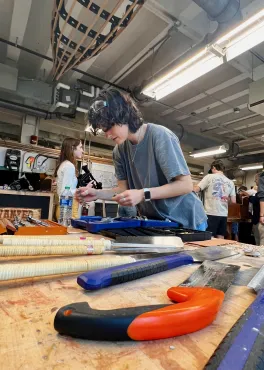
We understand that design education can come with financial and environmental costs. That’s why we’ve worked hard to reduce barriers and make essential tools and materials more accessible. We’ve built a lending library of tools and materials that students can share—reducing costs and promoting sustainability. To make sure every student has access to high-quality materials, we’ve partnered with Blick Art Materials to create affordable supply kits. These kits are delivered directly to Hayes Hall, so you’ll have what you need, when you need it.
Frequently Asked Questions:
Question:
Is admission based only on my portfolio?
No.
While the portfolio plays a significant role in the review process, faculty also consider a student's development throughout the Foundations year, engagement with the design process, ability to respond to feedback, and readiness for advanced studio coursework.
Design is an iterative discipline. We value curiosity, growth, reflection, and problem-solving just as much as polished final outcomes.
Question:
Do students ever change their intended major during Design Foundations?
Absolutely.
Many students arrive at Ohio State with a clear idea of which major they want to pursue. Others discover new interests after gaining exposure to different design disciplines during the Foundations year.
Design Foundations is intentionally structured to help students explore the breadth of design before committing to a specific path.
Question:
What happens if I decide not to pursue a Design major?
That's okay.
Annually, 15%-20% of our students discover that another academic path is a better fit for their interests and goals — and with 200+ other majors at Ohio State, there are lots of other options. The Foundations experience provides valuable creative problem-solving, communication, and collaboration skills that are applicable across many disciplines.
Students who successfully complete all Design Foundations requirements may also earn the Design Foundations Minor.
Our academic advising team works closely with students throughout the year to help them explore options and develop plans that support their long-term success.
Question:
What happens if I am not admitted to my intended major?
Students who are not admitted to their intended major are encouraged to meet with academic advisors and faculty to discuss available options and future academic pathways.
The Design Foundations experience remains a valuable part of a student's Ohio State education and provides skills and coursework that can support a variety of academic and professional directions.
Question:
Can I apply to a Design major again in the future?
Student reflections on Design Foundations
Melissa R. - Industrial Design

As a non-traditional student, I had reservations about reentering the academic space without much of a portfolio. I was concerned that my lack of tangible work might keep me from being admitted into the design program and would find me lagging behind my classmates. The year of design foundations resolved these concerns for me in several ways. Not only was a portfolio of work not required for acceptance into the program, but our professors also taught us how to synthesize our work and discuss it in a professional portfolio format. I also found that although skill levels and experience varied across the classroom, the structure of both semesters eased all of us into design, learning about principles, theory, and practice in a cumulative manner.
I am deeply grateful for the structure of this program and the experience I had in my design foundations year. I learned much about the basics of design and was able to explore and learn about each of the four design majors before transitioning to the second year. This setup was extremely beneficial for me as I discovered that my interests and career goals were more aligned with Industrial Design than with Interior Design, my previously declared major. Thanks to my professors’ guidance and the information I was able to gather in my design foundations year, I was able to choose a major that deeply resonates with me and my career goals.
The principles I learned in my design foundations year have also proved to be invaluable in my design practice. Without any previous exposure to design in an academic setting, I can imagine completing the design projects I am working on now would have been quite challenging. With the knowledge I gained in my design foundations year, however, I am now able to employ a more wholistic design process. It truly has proved to be the foundation that I needed.
Izzy L. - Experiential Media Design

I had no idea what I wanted for my future. I knew I was creative but didn’t want to major in art. I googled computer science jobs—something my parents would’ve liked—and that’s when I found UI/UX design. This seemed a good compromise between my interests and theirs. So, I applied to the Foundations Design program, and my first year was nothing like I’d imagined.
I learned how to think and work like a designer, but also about myself and my classmates. We spent time together daily—working, hanging out, relaxing—and supported each other academically and emotionally. Many projects felt personal, leading to moments of vulnerability with peers and professors.
Though most projects weren’t group-based, communicating with others opened up new ideas, methods, and techniques. Now in the Experiential Media major, I still think about how design is about sharing, coming together, and trying new things.
As a somewhat nervous person, I sometimes struggle to connect with others. But in Foundations, I took a leap of faith and let my peers see the real me. The result was real connections, real friendships—something I’ll always be grateful for.
Grace M. - Industrial Design

I chose The Ohio State University’s design program because I was drawn to how seriously it takes creative thinking—not just making things look good but understanding why they matter. Each project is rooted in purpose, helping build a strong foundation of design knowledge. I learned to embrace critique, trust my instincts, and lean on my peers.
At first, I was not certain what major to pursue, but the assignments in Design Foundations made my decision easy. The program lets you explore the best of all the majors and test everything out. I was fortunate to meet some amazing peers in my classes. Since the studios were long, I was able to make best friends with people in the program. We supported each other through late nights in Hayes and built a true sense of community. I can be myself and develop wild ideas—with the help of others.
Design Foundations pushed me to think deeper, work harder, and refine my craft. But what truly made the difference were the teachers. They challenged me, supported me, and believed in me—even when I doubted myself. They helped me become not only a better designer, but a better person. I am grateful for the experience, and I would not trade it for anything.
Lilly G. - Interior Design
I chose Ohio State because I was looking for a design program that felt more personal and close-knit. Something that would allow me to truly connect with my peers and professors, rather than feeling like just another number in a massive cohort. Being a lifelong Buckeye fan, the opportunity to combine my school spirit with my passion for design made the decision feel natural and exciting.
When I first joined the program, there was a sense of competition. It’s a selective environment, and that can create tension. But that mindset quickly shifted. Instead of competing, my classmates and I began to realize we were all in this together. Supporting each other, sharing ideas, and collaborating became the norm—and that sense of community has been one of the most valuable parts of my experience.
The foundations courses were a turning point for me. They gave me space to experiment, reflect, and discover how I think and create as a designer. I learned to slow down during iteration, trust the process, and embrace exploration. Those lessons have stuck with me and continue to shape how I approach projects in my upper-level classes.
I’ll admit, I was worried at first that I wouldn’t be a “good fit” for the design program. Design can feel intimidating when you’re just starting out, and I questioned whether I had the right skills or perspective. But I quickly realized there’s no single mold for what a designer should be. Everyone brings something unique to the table and that diversity of thought and style is exactly what makes the program so dynamic and inspiring.
Already an Ohio State student looking to change your major to Design?
Current Ohio State students who are not enrolled in Design Foundations may be eligible to petition for consideration for a future Design Foundations cohort.
The petition process is intended for students changing majors, students transitioning from another Ohio State regional campus, and other eligible Ohio State students seeking to enter the Design curriculum. If you are an incoming new first-year student (NFYS) on the Columbus or Newark campus, there is no need to petition.
Learn more about eligibility, deadlines, and the Design Foundations Petition process >
Advisor, Faculty, and Staff Reference
Students in Design Foundations (Columbus and Newark Campuses)
Students currently enrolled in the Design Foundations curriculum should carry a plan code associated with their expressed area of interest:
- Industrial Design: INDDSN-PRE
- Interior Design: INTDSN-PRE
- Visual Communication Design: VSLDSN-PRE
- Experiential Media Design: XMDDSN-PRE
Students on Other Ohio State Regional Campuses
Students attending a regional campus other than Newark who intend to pursue Design after transitioning to the Columbus or Newark campus should use the DSGN-PRE plan and the appropriate sub-plan:
- Industrial Design: DSGN-PRE | Sub-Plan: IDD
- Interior Design: DSGN-PRE | Sub-Plan: INT
- Visual Communication Design: DSGN-PRE | Sub-Plan: VIS
- Experiential Media Design: DSGN-PRE | Sub-Plan: XMD
DSGN-PRE plans and their associated sub-plans may also be used when a student is admitted to the university any term other than Autumn, or as a transfer, campus, or major change student awaiting eligibility to start into Design Foundations or a portfolio evaluation.
Important: These codes identify a student's intended area of study for advising, communication, and enrollment planning purposes.