Advanced Collaborative Design
Prereq: Enrollment in Design major, or Grad standing, or permission of instructor.
Prerequisite: Admission to Bachelor of Science in Design program; or Master of Fine Arts in Design program; or Permission of Instructor.
Advanced Collaborative Studio is offered as a studio experience that crosses the disciplinary boundaries between our various academic design programs. To create the conditions needed for this type of experience, we offer multiple sections of these courses, each with a different topic, and some unorthodox enrollment constraints.
To achieve the “cross-disciplinary” experience, the section enrollments are controlled to try to balance students from our four undergraduate design disciplines across the sections. This means that no more than 6-7 students per undergraduate major are allowed to enroll into a single Collaborative Studio section.
If you receive a message stating that remaining seats are reserved for another group, you need to try to enroll another section as seats reserved for your major are full.
Students: know your enrollment window!
Enrollment windows (AKA Scheduling Appointments) are assigned by the Office of the University Registrar the Monday before Autumn Break. These assignments take into account a great number of legal, institutional, technological, and practical constraints. Seats in individual sections are "first come, first served" based on the university assigned enrollment windows.
Please determine your Enrollment Window in BuckeyeLink and take note of your assigned date and time.
The instructors for each section have provided an informational sheet about the topic they are offering, and these can be found below along with the enrollment information needed.
Spring 2027 Topics and Enrollment Information
Class # 26275 - Peter Chan
BRANDING FOR GOOD:
Developing Purposeful Branded Packaging System for Positive Social Change
This Collaborative Studio introduces students to the theories, principles, and case studies of branding, with a focus on developing a strategic and conceptual framework centered around key brand design elements: brand perception, experience, and promise. Design teams will investigate and apply a range of design elements, messaging strategies, and packaging systems to express the essence, personality, and attributes of their selected brands.
What is “Branding for Good”?
“Branding for Good” leverages the influence and reach of brands not solely for profit, but to address broader societal issues, advocate for change, and support meaningful causes. It involves the strategic use of brand identity, messaging, and design systems to drive positive social, environmental, or cultural impact. Rather than focusing exclusively on increasing brand recognition or market growth, this approach aims to inspire meaningful change, raise awareness, and contribute to societal and ecological well-being.
Learning Outcomes and Areas of Exploration
Through team-based research, concept development, and prototyping, students will design comprehensive branded packaging systems that support purpose-driven brands and communicate their social or environmental missions with authenticity and clarity.
By the end of the course, students will be able to:
- Design purpose-driven packaging systems that clearly reflect and communicate the brand’s core mission and values.
- Develop authentic brand narratives using cohesive visual and verbal elements aligned with the brand’s goals.
- Create engaging packaging experiences that foster audience connection and enhance brand perception.
In creating a full packaging system, students will explore the following core design components:
- Brand Story – Articulating the brand’s mission, purpose, and value through narrative and visuals.
- Functional & Emotional Messaging – Balancing product info with emotional appeal to build consumer connection.
- Brand Hierarchy – Structuring brand elements for clarity, consistency, and strategic messaging.
- Form, Structure & Materials – Designing packaging for function, shelf appeal, and sustainability.
- Usage and Disposal – Accounting for user behavior and environmental impact across the product lifecycle.
- Package Format – Choosing between single or multi-pack solutions for branding and retail efficiency.
- Visual Identity – Applying consistent brand marks, typography, color, and graphic language to reinforce brand equity.
- Retail Display & Point-of-Purchase – Enhancing shelf impact and shopper engagement through effective presentation.
- Retail Service Environment – Aligning packaging with the retail context to enhance the brand experience.

SP 2025: Team Jeni’s - Scoop The World: Celebrating Heritage, One Flavor at a Time.
SP 2025: Team Starbucks - Cups Cause: Sip Kindness, Carry Love.
Class # 26276 - Rebekah Matheny
- ASG/Chute Gerdeman will be providing support for the studio; however, you will need to make travel arrangements to their office 1 day a week. 501 W Schrock Rd, Westerville, OH 43081 (just off 270 & Cleveland Ave)
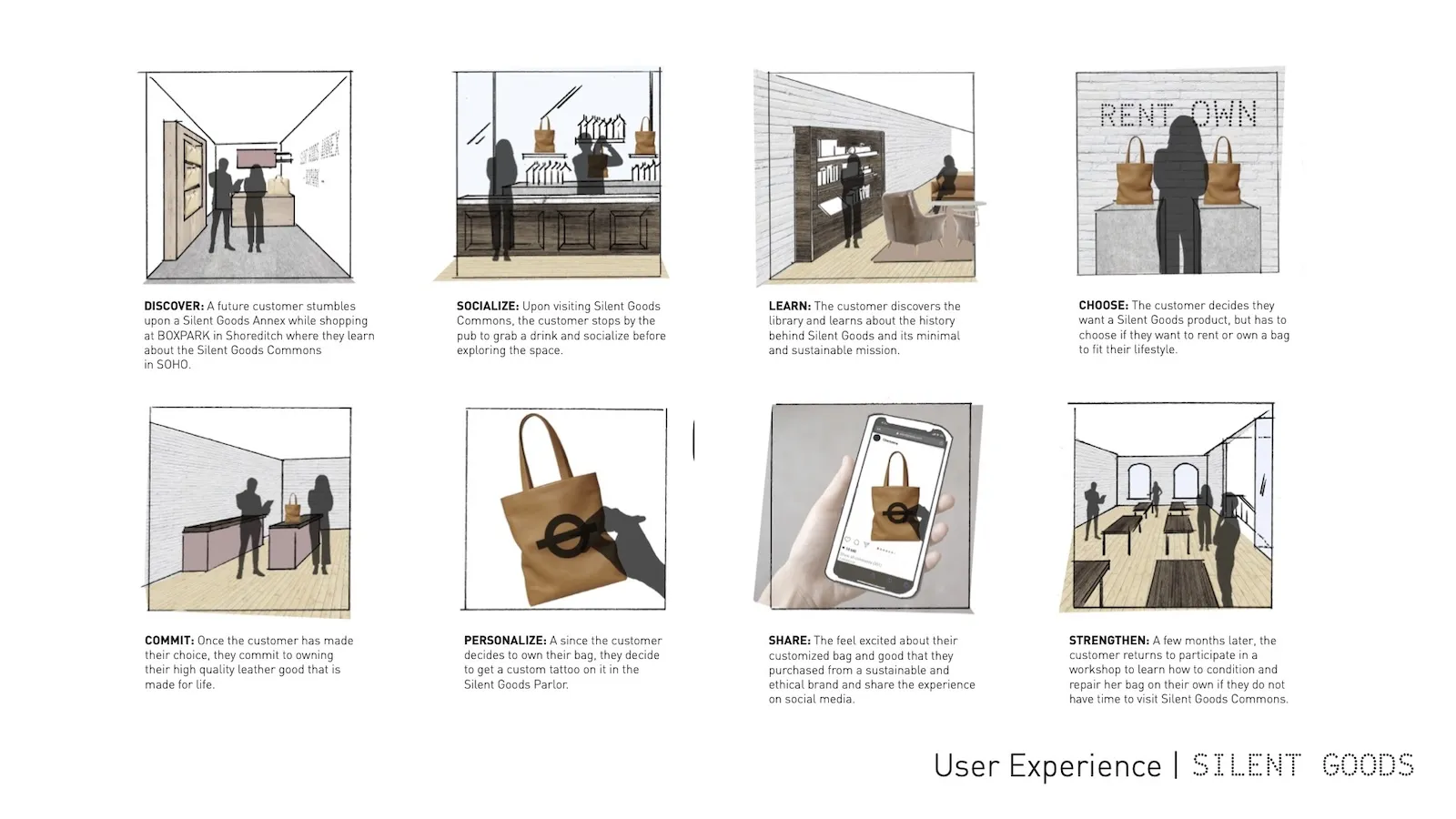
In creating a final retail experience design, student teams will explore the following core design components:
- Brand Positioning - Creating a Brand story based on the creation of or translation of the brand’s purpose.
- Brand Strategy – Translation of brand’s position into actionable design principles.
- User Journey – Designing the process and services the consumers experiences from attraction to point of purchase.
- Brand Experience – Designing the digital, physical, and human touchpoint that the customer experiences to provide both functional and emotional experiences.
- Sustainable selection of and/or creation of Materials, Visual Communication/Environmental Graphics, Brand Mark, Furniture and Fixtures, Lighting, Uniforms, Packaging, etc.
Class # 26277 - Adam Fromme
